
SELECTION GUIDE · 14 SEP 2026
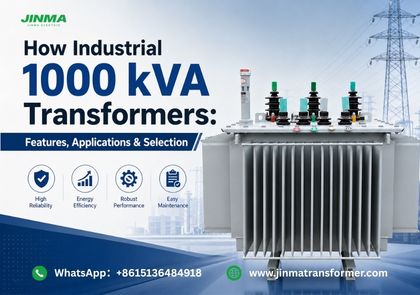
1000 kVA Transformers: Features, Applications & Selection
A practical starting point for comparing voltage, cooling, installation and documentation requirements.
FULL TECHNICAL ARTICLE
CUSTOMER-SUPPLIED SOURCE
1000 kVA Transformers: Features, Applications & Selection
Release Time: 20260914
In industrial powerdistribution, commercial complexes, datacenters and newenergy gridtied scenarios, 1000 kVA transformers stand among the most widelyadopted mediumcapacity distribution transformers. Sitting between smallscale civiluse transformers and heavyduty industrial main transformers, they satisfy continuous power consumption for mediumandlargesize facilities while delivering high adaptability, good costperformance and long working life.
In this article, we walk you through definitions, core characteristics, typetotype differences, application cases, selection guidelines, currentload calculation methods, common faults and priceinfluencing factors of 1000 kVA transformers. We deliver professional references for engineering procurement, electrical design and equipment operationandmaintenance work.
What Is a 1000 kVA Transformer
A 1000 kVA transformer is powertransformation hardware with rated apparentpower of 1000 kilovoltamperes (1 MVA). Operating on Faraday’s electromagneticinduction principle, it transfers electrical energy across separate circuits. Its core missions include voltage stepup / stepdown and electrical isolation. It is foundational hardware within transmissionanddistribution power systems.
The core meaning of kVA
Transformer nameplates use apparentpower (kVA) instead of activepower (kW). This happens because transformer load limits are governed by winding heating and core losses — independent of load powerfactor, making kVA suitable for diverse electrical environments.
Power factor 1.0 (pure resistive load): maximum deliverable activepower reaches 1000 kW
Typical industrial power factor 0.8: practical available activepower equals roughly 800 kW
Core current parameters
Fullload current values shift with ratedvoltage. Industrystandard current benchmarks are listed below: Lowvoltage side 400 V: approx. 1443 A Lowvoltage side 480 V: approx. 1203 A Highvoltage side 11 kV: approx. 52.5 A
Mainstream equipment type
Three major families of 1000 kVA transformers exist for different installation conditions:
Oilimmersed transformers: Cooling and insulation realised via insulating oil, mostly ONAN natural oilcirculation aircooling. High durability, solid overload capability and favourable cost. Dominant for outdoor distribution deployments.
Drytype transformers: Two construction variants: epoxyresin cast type and VPI vacuumpressure impregnated type. Heat dissipation via air, insulation from solid materials. Outstanding fireresistance, nearmaintenancefree daily operation. Preferred for indoor locations and firerisksensitive premises.
Padmount boxtype transformers: Fullyenclosed integrated cabinet construction, most models house oilimmersed transformers internally. Compact footprint, high integration, frequently used for outdoor distribution nodes serving commercial zones and industrial parks.
General standard parameters
Equipment complies with IEC 60076, ANSI/IEEE and other international specifications, common industry specifications: Highvoltage rating: 6 kV ~ 33 kV (11 kV, 13.8 kV, 22 kV are mainstream options) Lowvoltage rating: 400 V, 415 V, 480 V, 600 V (threephase) Operating frequency: 50 Hz / 60 Hz Vector group: Dyn11 (industry mainstream; superior harmonic suppression and earthing performance) Impedance voltage: 4 % ~ 6 %, balancing currentlimiting and voltageregulation performance Operating efficiency: ≥ 98.5 %
Key Features of 1000 kVA Transformers
Balanced capacity, performance and commercial value make 1000 kVA transformers the preferred option for mediumtolarge distribution projects. Core strengths fall under electrical performance, mechanicalthermal design, safety & servicelifespan categories.
Core electrical performance
Rated capacity stabilises at 1000 kVA. Voltage, frequency and impedance parameters match global mainstream distribution grids. The Dyn11 vectorgroup effectively suppresses harmonics and stabilises threephase voltages, adapting for nonlinear loads such as motors, variablefrequency drives and server hardware. Accurate fullloadcurrent figures paired with strong voltageregulation; ±2×2.5 % tapadjustment via offcircuit tapchanger suits locations with gridvoltage swings.
High efficiency and low loss
Highpermeability coldrolled grainoriented siliconsteel (CRGO) cores suppress core hysteresis and eddycurrent losses, cutting noload power draw. Comprehensive operatingefficiency reaches 98.6 %99.1 %, delivering excellent energysaving metrics. Under rated operating conditions, noload loss holds steady at 1.11.7 kW, loadloss sits within 911 kW. Low aggregateloss coefficients produce tangible longrun energy savings.
Excellent thermal stability
Oilimmersedtransformer rated temperaturerise strictly controlled ≤ 65 °C with generous thermal safety margin. Drytype variants deploy ClassF / ClassH premiumgrade insulation systems with improved hightemperature endurance and thermalageing resistance. They cope well with temporary overload events triggered by load fluctuations.
Structure and thermal design
Laminatedstack core construction reduces noise and mechanical damage risk. Windings are available in copperwound or aluminiumwound options; copper windings achieve lower losses and higher mechanical robustness. Targeted coolingsystem engineering: Oilimmersed units support ONAN / ONAF combined oilandair cooling for high heatdissipation efficiency and strong overloadhandling. Fullysealed oilimmersed configurations drastically cut maintenance frequency. Drytype transformers adopt AN naturalaircooling / AF forcedaircooling; no liquid dielectric media and simpler mechanical layout.
Safety protection and long life
Oilimmersed units integrate conservator tank, radiator, gas relay, pressurerelief assembly plus oiltemperature / oillevel monitoring modules for realtime fault detection. Drytype transformers use selfextinguishing flameretardant epoxy resin: zero fire hazard, moistureproof and dustproof. Units deliver shortcircuit withstand and lightningsurge resistance; protectiongrade can hit IP54. Expected servicelife ranges 2030 years under proper operationandmaintenance regimes.
Advantages of type differentiation
Oilimmersed transformer: ONAN natural oilair cooling with insulatingoilmediated heat dissipation and insulation. Good overall durability, strong overloadcapacity, attractive commercial value and robust outdoor weatherresistance. Widely deployed across outdoor distribution scenarios. Drytype transformer: Epoxycasting or VPI vacuumimpregnated build; air cooling and solidmaterial insulation. Fireproof / explosionproof, oilfree and lownoise. Minimal daily maintenance demand and high operational safety. Mainly for indoor and firesensitive sites. Boxtype padmounted transformer: Integrated fullyenclosed cabinet, mostly oilimmersed internals. Compact footprint, simple installation, suited for standardised outdoor powerdistribution in commercial and industrial zones.
1000 kVA Transformer Applications
The 1000 kVA transformer fits mediumscale sites requiring stable continuous power. It completes mediumvoltage (11 kV / 33 kV) downconversion to lowvoltage (400480 V) output, covering industrial, commercial, publicwelfare, newenergy and infrastructure segments.
Industrial factory scene
Widely used within automanufacturing, ironandsteel, chemical, mining, machining and portside plants. Delivers stable power supply for CNC machinetools, stamping presses, welding gear, aircompressors, automated productionlines and heavyduty motors. Handles industrialgrade load swings and shortterm overloads to sustain nonstop manufacturing workflows.
Large commercial buildings
Supplies distribution for shopping malls, office towers, hotels, university campuses and large supermarkets. Covers power consumption for elevators, centralHVAC, lighting, escalators and officegrade equipment to sustain reliable daily building operation. Drytype transformers are frequently selected here to eliminate indoor firerisks.
Public medical and livelihood facilities
Hospitals, schools and government venues demand extremely high powersupply safety and stability. Drytype 1000 kVA transformers are preferred: zerofirehazard, lownoise and maintenancelight. They guarantee uninterrupted power for medical apparatus, teaching hardware and emergencyresponse systems and prevent blackout incidents.
Data center and computing power room
Suitable for smallandmediumsize IDC computerrooms and AI compute hubs. Supplies steady power for serverracks, UPS arrays, computerroom cooling hardware and redundant powersupply frameworks. Designed to cope with highfrequency harmonicrich nonlinear loads; Kclass antiharmonic options mitigate loadinduced equipment degradation.
New energy gridconnected project
Deployed for distributed photovoltaic plants, smallscale windfarms and energystorage facilities. Performs generationside voltagestepup / stepdown and gridinterfacing. Balances volatile newenergy output and completes power aggregation and gridtied transmission, acting as core terminaldistribution hardware for renewableenergy installations.
Municipal infrastructure and special scenarios
Covers airports, railtransit, tunnelworks, largescale EVchargingstation clusters, automated warehousing and municipal substations. Handles both temporary construction power and permanent distributionsystem requirements. Adapts to complex outdoor environments and highdensity powerconsumption locations.
OilImmersed vs. DryType 1000 kVA Transformers
Identical base powerdelivery capability between oilimmersed and drytype 1000 kVA transformers, yet substantial divergences exist in cooling principle, firesafety, cost, maintenance and applicable environments. These differences form key engineeringselection criteria.
Selection and adaptation recommendations
Choose oilimmersed: Outdoor substations, heavyduty industrial / mine deployments, budgetconstrained projects with longduration highloading, when overloadcapacity and long servicelife rank highpriority. Choose drytype: Indoor computerrooms, hospitals, shoppingmalls, highrise buildings; projects with strict firesafety and environmentalprotection rules, prioritising safety and lowmaintenance operation.
How to Select the Right 1000 kVA Transformer
Thoughtful selection prevents equipment burnout from overload, excessive noload losses or sitemismatched hardware, securing 2030year stable service. Follow these seven core evaluation steps.
Accurate accounting of load capacity
Sum total activepower (kW) of all onsite electrical devices. Convert to required kVA capacity incorporating site powerfactor (commercialindustrial range:0.60.8). Reserve 1525 % futureexpansion margin. We recommend holding daily operatingloadrate within 6080 % balancing energyefficiency and equipment lifespan.
Calculation formula:
Required kVA = (Total kW × simultaneity coefficient) ÷ powerfactor
Matching electrical parameters
Strictly match grid highvoltage input, equipment lowvoltage output and grid frequency. Prefer Dyn11 vectorgroup and 46 % standard impedance. Select noload / onload tapchangers responding to local gridvoltagefluctuation severity.
Select equipment type by environment
Oilimmersed transformers suit conventional outdoorfactory and suburbansubstation industrialdistribution usecases. Drytype units apply for indoor computerrooms and denselyoccupied fireregulated premises. Boxtype padmounted transformers are an option for spaceconstrained sites seeking allinone distributionsolutions.
Assess the environmental conditions of the site
For harsh operatingconditions: highambienttemperature, highaltitude, heavydust, corrosive atmosphere — either derate equipment powerrating or specify reinforced dustproof / anticorrosion mechanical build. Where frequencyconverters and servers produce nonlinearloads, specify Kclass antiharmonic transformers to suppress harmonic interference and mitigate heatrise and component losses.
Energy efficiency and full cycle cost
Prioritise highefficiency models with efficiency ≥ 98.5 %; compare noloadloss and loadloss figures. Copperwound variants deliver superior efficiency and longer lifespan; aluminiumwound solutions offer better upfront costperformance. Evaluate totallifecycle value covering procurement, installation, O&M and energyconsumption expenditure — avoid making decisions purely on unit price.
Verification standards and protection configuration
Hardware must conform to authoritative industry specifications such as IEC, ANSI and corresponding nationalstandards. Configure safetymonitoring modules: temperaturemonitoring, gasprotection, pressurerelief, remoteintelligent monitoring as dictated by siteconditions. Match IPprotectiongrade to achieve endtoend operational compliance and onsite safety.
Manufacturer and aftersales selection
Select qualified originalequipmentmanufacturers holding complete certification documentation, official typetestreports and localised aftersalessupport networks. Rigorously audit technicalspecifications, warrantycoverage and deliveryleadtimes. Ensure fullprocess controllability for equipment installationcommissioning, acceptancehandover and longterm operationalmaintenance.
1000 kVA Transformer Current and Load Calculation
Currentandload calculations underpin distributionsystem design, cablesizing and switchgear specification. All formulas follow threephase industrystandard conventions.
Threephase fullloadcurrent formula:
I = (rated kVA × 1000) ÷ (√3 × line voltage V) = 1000000 ÷ (1.732 × V)
Fullvoltagegrade fullloadcurrent lookup table: Lowvoltage side: 400 V (1443 A), 415 V (1391 A), 480 V (1203 A), 600 V (962 A) Highvoltage side: 11 kV (52.5 A), 13.8 kV (41.8 A), 22 kV (26.2 A), 33 kV (17.5 A)
Active power load conversion
Activepower kW = rated kVA × powerfactor PF = 1.0 → 1000 kW PF = 0.9 → 900 kW PF = 0.8 → 800 kW (common industrial baseline)
Industrybestpractice: to preserve equipment lifespan, restrict longterm continuousload ≤ 80 % of nameplate capacity. At PF 0.8 this corresponds to continuousload ≤ 640 kW.
Practical calculation case
Scenario: 1000 kVA, 11 kV / 400 V threephase transformer, load powerfactor 0.8 Lowvoltage fullloadcurrent ≈ 1443 A Highvoltage fullloadcurrent ≈ 52.5 A Maximum usable activepower = 800 kW Recommended safe continuousoperatingrange = 640720 kW
Common Problems With 1000 kVA Transformers
Equipment faults mostly stem from sustained overload, harsh environmentalconditions, improperO&M and component ageing. Targeted inspection and preventivemaintenance extend servicelife and lower outagerisk.
Equipment overheating
Causes: Longterm overload operation; coolingsurface dustclogging; coolingfan failure; excessive ambienttemperature; heavy harmonicloading driving abnormal heatgeneration. Hazards: Accelerated insulationlayer ageing; insulatingoil degradation; in severe cases winding overheating and burnout leading to unit shutdown. Preventive measures: Enforce controlled operatingloadrates; regularly clean coolingcomponent dustdebris; continuously monitor equipment operatingtemperature. Deploy antiharmonic transformers for nonlinearload environments to mitigate heatrelated risks.
Insulation aging and moisture breakdown
Causes: Prolonged hightemperature runtime accelerates insulationageing; sealingcomponent degradation permits moisture ingress; insulatingoil contaminationdeterioration; gridvoltage surges damaging insulation material. Hazards: Sharplyreduced insulationresistance triggering partialdischarge; risk of catastrophic shortcircuit and surfaceflashover electricalfaults. Preventive measures: Periodically test insulatingoil quality and equipmentinsulationresistance; promptly replace degraded sealinghardware; keep transformerbody and installationenvironment dry and clean.
Oilimmersed transformer oil leakage
Causes: Aged failed sealinggaskets; weldjoint manufacturingdefects; vibrationwear during operation; internalpressurefluctuations induced by ambienttemperaturecycling produce oilseepage / leakage. Hazards: Degraded heatdissipation and insulationperformance; site environmentalpollution; elevated firehazard and shortcircuitincident probability. Preventive measures: Routine inspection of sealingpoints and weldseams; timely renewal of aged sealingparts; prioritise fullysealedconstruction transformers to mitigate spillrisks at source.
Winding failure
Causes: Gridshortcircuitcurrentshock; insulationlayer damagefailure; windingfastenerloosening; frequent largeamplitudeloadfluctuations producing windingdeformation and shortcircuitfaults. Hazards: Localwinding overheating and arcingdischarge; worstcase scenario tankrupture, fire, totalequipmentwriteoff and powersupplyincidents. Preventive measures: Upgrade gridrelayprotection configurations to suppress shortcircuitimpulses; strictly restrain overloadandcyclicloadoperatingconditions; select transformers with mechanicallyrobust stablewindingconstruction.
Casing and terminal block failure
Causes: Bushing surface dustaccumulation; surfacecondensationmoisture; terminalblockloosening; longtermoperationdriven ageingcracking causing poorcontact and insulationbreakdown. Hazards: Externalsurface flashover and arcdischarge; risk of unexpected tripping and outage; severe cases trigger electricalsafetyincidents. Preventive measures: Periodically clean bushingsurfacegrime; fully torquecheck terminalblocks; execute scheduledelectricalinspectionandperformancetesting to eliminate latent defects early.
Other frequently asked questions
Abnormal noise & vibration, tapswitch poorcontact, partialdischarge events and voltageregulationfailure usually originate from nonstandardinstallation, componentageing or parametermismatch. Regular preventivemaintenance greatly reduces occurrence probability.
Customization Options for 1000 kVA Transformers
Qualified manufacturers support fulldimension customengineering to match special operatingconditions, localgridstandards and projectspecifications. Major customisable dimensions are listed below.
Customization of electrical parameters
Custom high/lowvoltage ratings, 50 Hz / 60 Hz dualfrequency, vectorgroup and impedancevalues. Optional widerange ±4×2.5 % tapchanger; K4 / K9 / K13 antiharmonicgrade customisation; specialinsulationlevel variants for newenergy installations, computerrooms and industrial specialloads.
Material and energy efficiency customization
Flexible selection of copperwound / aluminiumwound windings; conventional siliconsteel or amorphousalloy corematerials. Ultralowloss highenergyefficiency bespoke designs available. Oilimmersedtype can specify ecofriendly esterbased insulatingoil for lowcarbon green safeoperation.
Heat dissipation and environmental customization
Customspec naturalaircooling, forcedaircooling, forcedoilcooling modes for hightemperature, highaltitude and subzerocoldclimate deployments. Anticorrosion, dustproof, moistureproof and seismicreinforced specialbuilds for coastal, minesite and tunnelharshenvironments.
Structure and protection customization
Multiple mountingconfigurations: verticalfloorstand, horizontallayout, plinthmount, mobileskidmount. Protectiongrades spanning IP00 through IP54. Equipment outerdimensions and surfacefinishcolour can be modifiedtoorder to adapt to sitespaceconstraints.
Intelligent monitoring and accessories customization
Addon smartfunctions: PT100 temperaturesensing, IoT remotemonitoring, clouddataupload, faultalarminterlock linkage. Optional surgearresters, meteringmodules, specialbushings, forcedcoolingfans and auxiliaryhardware to realise intelligent monitoring, precisecontrol and automatedO&M workflows.
Special certification customization
Compliance adaptation for globalmainstreamstandards: GB nationalstandards, IEC, ANSI, UL, CSA etc. Custombuild according to acceptancespecifications for newenergy, medical, municipalutility and powerindustry verticalsegments to satisfy project complianceandacceptancedemands worldwide.
Conclusion
1000 kVA transformers represent widelydeployed mediumcapacity distributionhardware for factories, commercialbuildings, renewableenergyplants and municipalinfrastructure. Oilimmersed variants suit outdoordeployments requiring strong heatdissipation and competitive capitalexpense. Drytype transformers fit indoor, highoccupancysites and locations with strict firesafety and cleanlinessdemands.
Projectlevel selection must balance operatingconditions, siteenvironment, safetycodes, energyconsumptionprofile and totalcost. Combined with standardised installation and preventivemaintenance practices, this guarantees dependable longterm equipmentoperation.
We at Jinma Electric supply a complete portfolio of oilimmersed and drytype distribution transformers. We support customtunedparameter and mechanicalstructure engineering to satisfy distributionsystemrequirements for industrial, commercial and newenergysector projects.